Ha’penny Bridge Dublin: History & Visitor Guide
Ha’penny Bridge Dublin: History, Things to Do & Visitor Guide
There are grander bridges in Dublin. There are newer ones, longer ones and bridges that make a far bigger architectural statement.
Yet few are as unmistakably Dublin as the Ha’penny Bridge.
Its white cast-iron arch has crossed the River Liffey for more than two centuries, carrying generations of Dubliners between the north and south sides of the city. Today, it remains one of the capital’s most recognisable landmarks and one of the simplest ways to experience a genuine piece of Dublin history.
For visitors, the Ha’penny Bridge is much more than somewhere to stop for a photograph. Its story takes you back to a Dublin of ferries, tolls and horse-drawn traffic, while its location places you within easy walking distance of Temple Bar, Trinity College, O’Connell Street and many of the city’s best-known attractions.
If you’re planning a trip to Dublin, here’s everything worth knowing before you cross it.
What Is the Ha’penny Bridge?
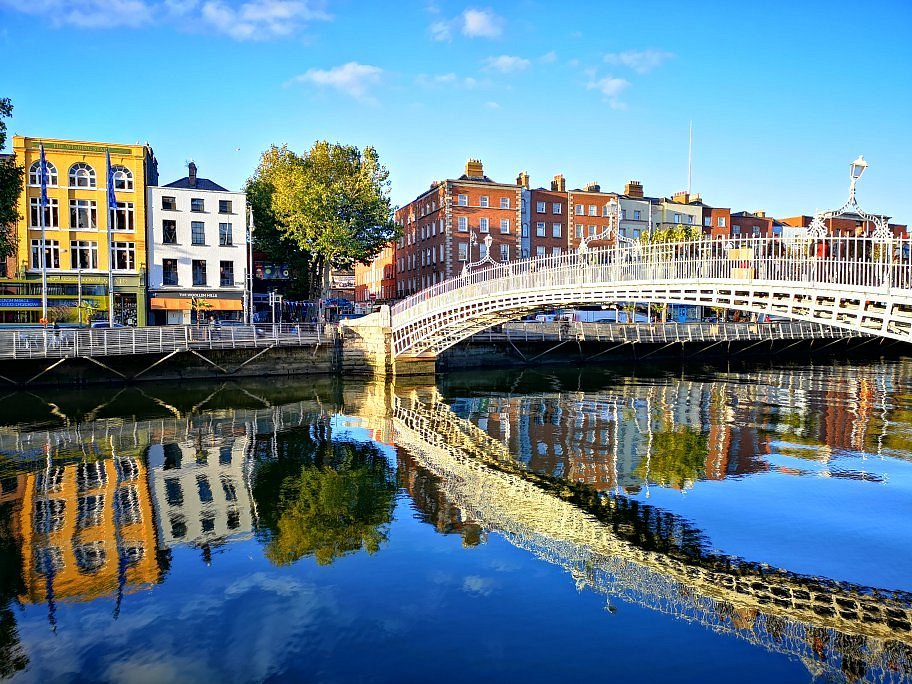
The Ha’penny Bridge is a pedestrian bridge crossing the River Liffey in Dublin city centre. It connects Liffey Street Lower on the north side of the river with Merchant’s Arch and Temple Bar on the south.
Opened in 1816, it was the first pedestrian bridge across the River Liffey and remains one of Dublin’s most recognisable historic landmarks.
Its official name today is the Liffey Bridge. Ask almost any Dubliner where the Liffey Bridge is, however, and you may get a puzzled look. Ask for the Ha’penny Bridge and everyone knows exactly where you mean.
That nickname has outlived the toll that created it by more than a century.
The History of the Ha’penny Bridge
To understand why the bridge exists, you have to imagine Dublin before 1816.
There was no pedestrian bridge at this point on the Liffey. Instead, people crossed the river using ferries operated by William Walsh, an alderman and ferry owner.
His ferries had seen better days. Eventually, Walsh was faced with a choice: repair the boats or provide Dublin with a bridge.
He chose the bridge.
Walsh received compensation for withdrawing his ferries and was granted a long lease on the new crossing. Crucially, he was also allowed to charge pedestrians the same fare they had previously paid to use his boats.
That small detail would give the bridge the name by which millions now know it.
When Was the Ha’penny Bridge Built?
The bridge opened on 19 May 1816.
Constructed from cast iron, its elegant elliptical arch spans approximately 43 metres across the River Liffey. At the time, cast-iron bridges were still relatively unusual, making the structure an important piece of early nineteenth-century engineering.
In its earliest days, only a few hundred people crossed the bridge each day.
Today, tens of thousands of pedestrians use it daily.
Why Is It Called the Ha’penny Bridge?
The answer is wonderfully simple.
Crossing the bridge originally cost half a penny — a “ha’penny” in everyday speech.
Pedestrians paid the toll at the bridge, with the money going to William Walsh under the terms of his lease.
The official name was originally the Wellington Bridge, after Arthur Wellesley, the Duke of Wellington.
Dubliners had other ideas.
The price of crossing became so closely associated with the bridge that “Ha’penny Bridge” became the name people actually used.
The toll finally disappeared in 1919, and in 1922 the bridge was officially renamed the Liffey Bridge.
More than a century later, the old nickname has stubbornly survived both.
Five Ha’penny Bridge Facts Worth Knowing
- It opened in 1816 as the Wellington Bridge.
- It was Dublin’s first pedestrian bridge across the River Liffey.
- The halfpenny toll ended in 1919, but the nickname remained.
- Its official name has been the Liffey Bridge since 1922.
- Around 30,000 people now cross it each day.
A Dublin Landmark That Nearly Lost Its Charm
The elegant bridge visitors photograph today hasn’t always looked quite so polished.
Over the decades, advertising appeared on it, the wooden deck was altered and various paint schemes were used to disguise rust and wear.
By the late twentieth century, its condition had become a serious concern.
Dublin City Council eventually carried out a major conservation project. More than 1,000 individual pieces of railing were labelled and removed for repair, while most of the original railwork was retained.
The bridge received a new anti-slip deck, improved lighting and restored granite work before reopening in 2001.
The restoration helped preserve the character of the bridge while bringing it up to modern safety standards.
Where Is the Ha’penny Bridge in Dublin?
The Ha’penny Bridge sits right in the centre of Dublin, crossing the River Liffey between Liffey Street Lower on the north side and Merchant’s Arch on the south.
Cross towards the south side and Merchant’s Arch leads almost immediately into Temple Bar.
That location makes the bridge particularly useful for visitors because several major Dublin attractions can be combined into one walking route.
Rather than treating the Ha’penny Bridge as a destination that needs an hour of its own, think of it as one of the highlights of a day spent exploring central Dublin on foot.
How Far Is the Ha’penny Bridge from Clifden Guesthouse?
One of the advantages of staying at Clifden Guesthouse, 32 Gardiner Place, is that you don’t need to plan a major journey every time you want to see another part of central Dublin.
The Ha’penny Bridge is approximately a 20-minute walk from Clifden Guesthouse, depending on your route and walking pace.
More importantly, the walk isn’t simply a journey from A to B. It takes you through an interesting stretch of Dublin city centre.
Clifden Guesthouse itself is located in a listed Georgian property, while O’Connell Street is only a short walk away, making it easy to begin exploring Dublin on foot.
Planning a Dublin city break? Check availability at Clifden Guesthouse and stay within easy reach of the Ha’penny Bridge and many of Dublin’s most famous attractions.
A Great Walking Route from Clifden Guesthouse
If it’s your first time in Dublin, don’t simply walk directly to the bridge. Turn the journey into part of your sightseeing.
1. Clifden Guesthouse – Gardiner Place
Begin at Clifden Guesthouse on Gardiner Place, an area characterised by Dublin’s Georgian architecture.
2. Walk Towards O’Connell Street
Head towards O’Connell Street, Dublin’s principal north-city thoroughfare.
You’ll quickly encounter some of the landmarks that have shaped the city’s story.
3. Stop at the GPO
The General Post Office is one of Ireland’s most historically significant buildings and was a focal point of the 1916 Easter Rising.
Even if you’re not taking a tour, stop to look at its imposing façade before continuing towards the River Liffey.
4. Continue Towards the River Liffey
Walk south along O’Connell Street until the city opens onto the river.
From here, follow the north quays westwards towards the Ha’penny Bridge.
5. Cross the Ha’penny Bridge
Don’t rush across.
Pause around the centre and look east and west along the Liffey. It’s one of those views that immediately places you in Dublin.
6. Walk Through Merchant’s Arch into Temple Bar
Crossing south brings you through Merchant’s Arch and into the narrow streets of Temple Bar.
Whatever your opinion of its famous nightlife, the area is worth exploring during the day for its cobbled streets, galleries, cultural venues, shops and street life.
7. Continue to Trinity College
From Temple Bar, Trinity College is only a short walk away.
That gives you a simple city-centre itinerary:
Clifden Guesthouse → O’Connell Street → GPO → River Liffey → Ha’penny Bridge → Temple Bar → Trinity College
For a first-time visitor, it’s an excellent introduction to Dublin without spending half the day on public transport.
What to Do Near the Ha’penny Bridge
The bridge itself takes only a few minutes to cross. Its real advantage is what surrounds it.
Explore Temple Bar
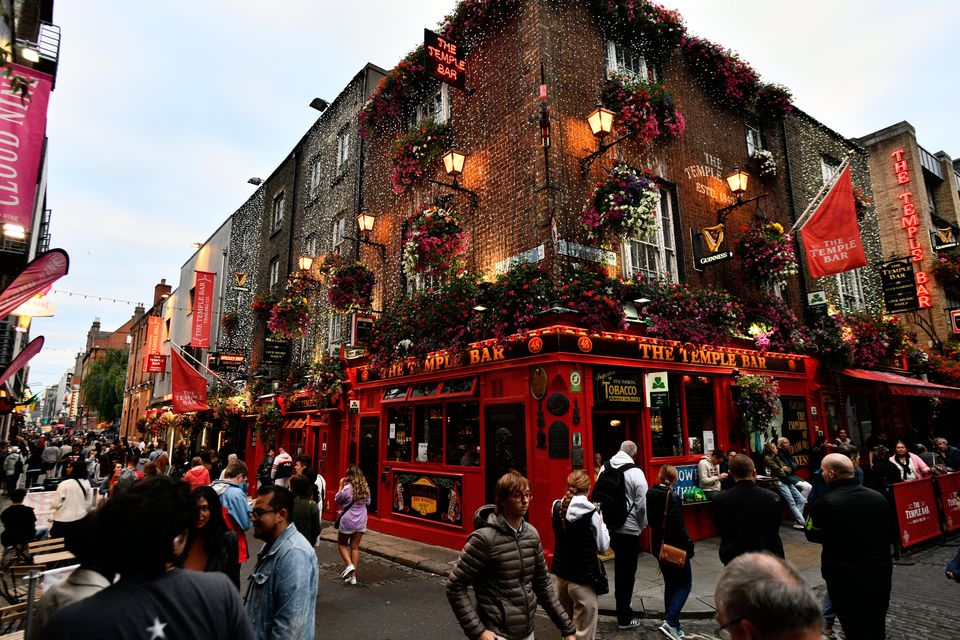
Temple Bar begins virtually as you step off the southern end of the bridge through Merchant’s Arch.
It’s famous internationally for pubs and nightlife, but there’s more to the district than pints and photographs.
Walk its cobbled streets during the day and you’ll find galleries, independent businesses, cultural spaces and some of Dublin’s liveliest street scenes.
Visit Temple Bar Gallery + Studios
For something beyond the usual tourist trail, Temple Bar Gallery + Studios is close to the bridge.
It offers a different side to an area too often reduced to nightlife and is a worthwhile stop for visitors interested in contemporary art.
Walk to Trinity College
One of Ireland’s most famous universities is just a short walk away.
You can explore the historic campus or book a visit to see the Book of Kells experience.
Visit Dublin Castle
Continue through the south city centre and you’ll soon reach Dublin Castle, a site that has played a central role in Irish history for centuries.
Combined with the Ha’penny Bridge, Temple Bar and Trinity College, it makes for an excellent half-day historical walking route.
Explore the River Liffey
Don’t disappear into Temple Bar immediately after crossing the bridge.
Walking along the quays gives you a different perspective on Dublin and its architecture.
You can also compare the Ha’penny Bridge with some of the other crossings that have come to define the city, including O’Connell Bridge and the newer Millennium Bridge.
When Is the Best Time to Visit the Ha’penny Bridge?
The bridge is in a busy part of Dublin and is used by locals as well as visitors, so timing can make a surprising difference.
Early Morning
If photography is your priority, early morning is hard to beat.
The bridge is generally quieter, giving you more space to appreciate its ironwork and photograph the structure without the daytime crowds.
During the Day
Daytime is best if the bridge forms part of a wider sightseeing route through the city.
Cross it on your way between the north city centre, Temple Bar and Trinity College rather than making a separate journey.
Around Sunset and Blue Hour
This is when the Ha’penny Bridge becomes particularly photogenic.
As daylight fades, the bridge’s lamps and surrounding city lights begin reflecting on the River Liffey.
It’s a completely different view from the morning and worth returning for if photography is part of your trip.
Where to Take the Best Ha’penny Bridge Photos
The obvious photograph is from the bridge itself, but some of the best views are actually from the quays.
Try photographing:
- The complete arch from the north bank of the River Liffey.
- The bridge looking towards Merchant’s Arch and Temple Bar.
- The ironwork and lamps from close range.
- The view east or west along the Liffey from the centre of the bridge.
- The bridge around sunset or blue hour when its lights reflect on the water.
One piece of advice: remember that this is still a working pedestrian crossing used by thousands of people every day, so avoid blocking the walkway while trying to get the perfect photograph.
A Half-Day Dublin Itinerary Including the Ha’penny Bridge
If you’re staying at Clifden Guesthouse and have half a day available, this is a simple route that covers a surprising amount of Dublin.
Clifden Guesthouse
Begin among the Georgian architecture of Gardiner Place.
O’Connell Street
See the Spire and explore one of Dublin’s most important city-centre streets.
GPO
Discover one of the key locations associated with the 1916 Easter Rising.
River Liffey
Walk west along the quays.
Ha’penny Bridge
Cross Dublin’s historic 1816 pedestrian bridge.
Temple Bar
Explore its streets, galleries, shops and cultural venues.
Trinity College
Walk the historic campus and visit the Book of Kells experience if you have booked ahead.
Allow extra time if you’re entering attractions, stopping for lunch or doing what Dublin tends to encourage rather well: wandering down a street simply because it looks interesting.
Is the Ha’penny Bridge Worth Visiting?
Yes – particularly because visiting the Ha’penny Bridge costs nothing, takes very little time and places you beside several of Dublin’s major attractions.
Don’t expect an attraction that takes an hour to explore. That’s missing the point.
The appeal lies in crossing something Dubliners have been crossing since 1816.
You’re walking across a surviving piece of the city’s everyday history rather than viewing it from behind glass.
And once you reach the other side, Dublin simply carries on.
Why Staying in Central Dublin Changes Your City Break
Dublin rewards walking.
Look at a map and many attractions that seem separate are actually relatively close together.
O’Connell Street leads towards the Liffey. The Ha’penny Bridge takes you into Temple Bar. Trinity College sits just beyond it. From there, Grafton Street, Dublin Castle and St Stephen’s Green can all become part of the same day’s exploring.
Staying centrally means you can experience these connections rather than seeing Dublin as a collection of isolated tourist attractions.
It also gives you more freedom.
You can head out early before the crowds arrive, return to your accommodation during the day, or walk back into the city for dinner without building every outing around transport.
Why Stay at Clifden Guesthouse When Exploring Dublin?
Clifden Guesthouse is located at 32 Gardiner Place in Dublin city centre, in a listed Georgian house that is around 200 years old.
That feels particularly appropriate when you’re visiting a city to discover its history.
Its position on the north side of the city makes it a useful starting point for exploring both sides of the River Liffey.
Head south and you can walk towards O’Connell Street, the GPO, Ha’penny Bridge, Temple Bar and Trinity College. Head in another direction and Croke Park is also nearby.
For visitors who want to spend their time experiencing Dublin rather than constantly travelling across it, that central location makes a real difference.
Planning your Dublin city break? Check availability at Clifden Guesthouse and make the city your starting point each morning.
Frequently Asked Questions About the Ha’penny Bridge
Why is it called the Ha’penny Bridge?
The bridge gets its nickname from the halfpenny toll pedestrians originally paid to cross it. Although the toll ended in 1919, Dubliners continued calling it the Ha’penny Bridge.
How old is the Ha’penny Bridge?
The Ha’penny Bridge opened on 19 May 1816, making it more than 200 years old.
What is the real name of the Ha’penny Bridge?
It opened as the Wellington Bridge in 1816 and has officially been called the Liffey Bridge since 1922. However, Ha’penny Bridge remains by far its best-known name.
Is the Ha’penny Bridge free to cross?
Yes. The Ha’penny Bridge is completely free to cross today. The original pedestrian toll was abolished in 1919.
Where is the Ha’penny Bridge?
The Ha’penny Bridge crosses the River Liffey in Dublin city centre, connecting Liffey Street Lower on the north side with Merchant’s Arch and Temple Bar on the south side.
Is the Ha’penny Bridge worth visiting?
Yes. It is one of Dublin’s most recognisable landmarks, is free to visit and sits within easy walking distance of Temple Bar, Trinity College, O’Connell Street and several other city-centre attractions.
What can you do near the Ha’penny Bridge?
Visitors can explore Temple Bar, walk to Trinity College, continue towards Dublin Castle or stroll along the River Liffey and see some of Dublin’s other famous bridges.
How long do you need at the Ha’penny Bridge?
Allow around 10–20 minutes if you simply want to cross the bridge, enjoy the views and take photographs. It is best incorporated into a longer walking tour of central Dublin.
How far is Clifden Guesthouse from the Ha’penny Bridge?
The Ha’penny Bridge is approximately a 20-minute walk from Clifden Guesthouse at 32 Gardiner Place, depending on your route and walking pace.
The journey can easily incorporate O’Connell Street, the GPO and the River Liffey.
Can you walk from Clifden Guesthouse to Temple Bar?
Yes. Temple Bar is around a 20-minute walk from Clifden Guesthouse, depending on pace and route.
Crossing the Ha’penny Bridge is also one of the most memorable ways to enter the Temple Bar area from the north side of the River Liffey.
Discover Dublin One Walk at a Time
The Ha’penny Bridge isn’t Dublin’s biggest attraction. It doesn’t need to be.
Its appeal comes from something more understated: for over two centuries, it has simply been part of the rhythm of the city.
Ferries have disappeared. The halfpenny toll is long gone. Dublin has expanded around it almost beyond recognition. Yet the little cast-iron bridge still carries thousands of people across the Liffey every day.
For a visitor, crossing it offers a small connection with that history — and a rather lovely way to get from one side of Dublin to the other.
And when you’re staying somewhere that allows you to reach places like this on foot, exploring Dublin becomes less about getting to the next attraction and more about discovering everything you encounter along the way.
Planning your visit to Dublin? Make Clifden Guesthouse your base and discover the Ha’penny Bridge, O’Connell Street, Croke Park, Temple Bar, Trinity College and more from a convenient Dublin city-centre location.